Duke B60 vs Seneca V
The Duke B60 leads, topping 5 of 7 compared metrics.
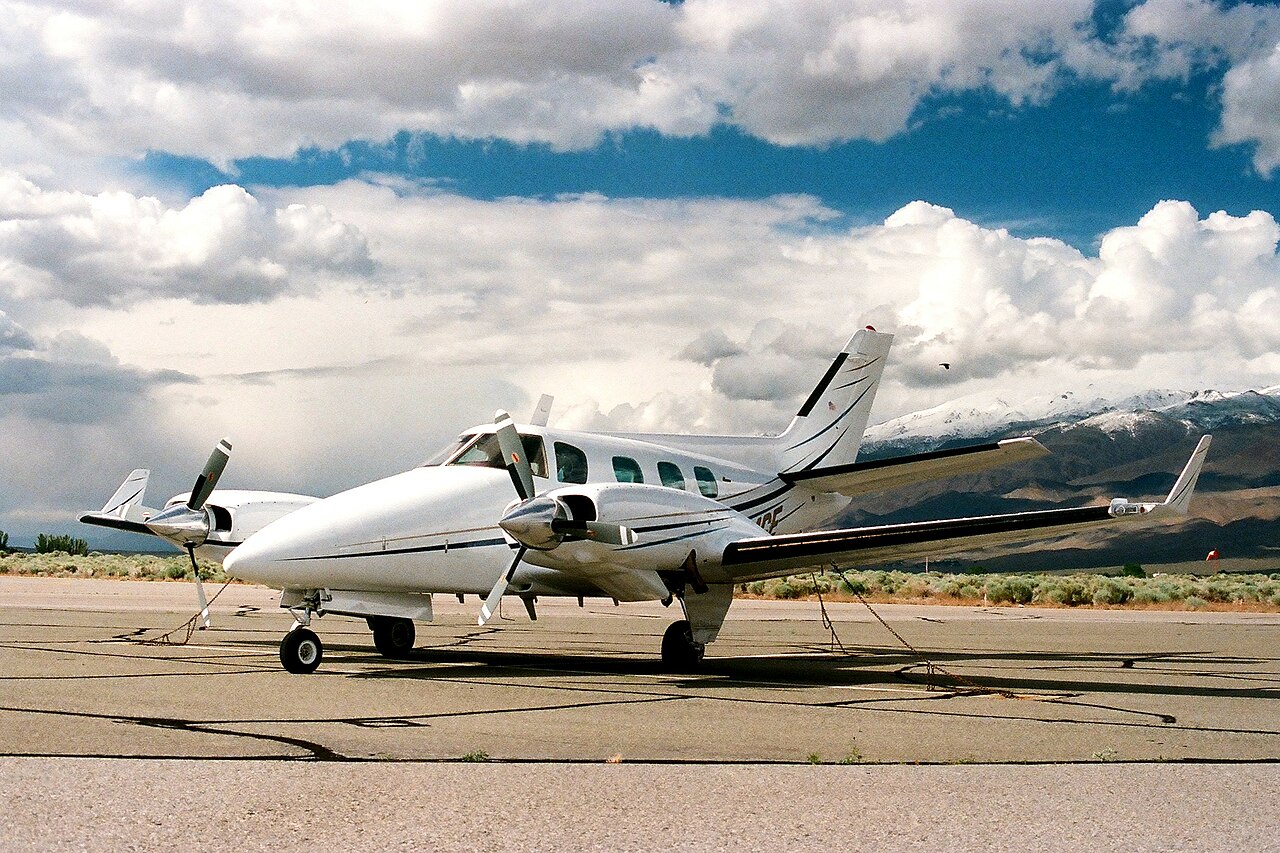
The Beechcraft / Textron Aviation Duke B60 (introduced 1974) and the Piper Aircraft Seneca V (introduced 1997) are two aircraft buyers regularly weigh against each other. Both are piston twins, which makes them natural cross-shopping rivals. The clearest separation between them is range, where the Duke B60 has the advantage. Below we compare them spec by spec, then break down which aircraft suits which mission.

6 more specs per aircraft — ceiling, climb, cabin, dimensions and more — are free with an account.
Duke B60 vs Seneca V: the key differences
- The Duke B60 delivers 30% more range (Duke B60: 1,080 nm; Seneca V: 828 nm).
- The Duke B60 delivers 12% more cruise speed (Duke B60: 220 kt; Seneca V: 197 kt).
- The Duke B60 and Seneca V are evenly matched on passenger capacity, both at 6 seats.
- The Seneca V is the newer design (introduced 1997 versus 1974 for the Duke B60), a gap of 23 years that usually shows up in avionics, cabin systems and fuel burn.
- The Duke B60 is the larger aircraft by maximum takeoff weight (6,775 lbs versus 4,773 lbs), which typically buys more cabin and payload at the cost of higher trip economics.
Which mission suits which aircraft
The Duke B60 is the stronger fit for regional and short-to-medium legs — its 1,080 nm of range removes fuel stops on those legs. The Seneca V, at 828 nm, is better matched to short-haul and regional hops, where lower trip cost counts for more than outright reach. If most of your flying sits inside the Seneca V's range, the Duke B60's extra capability is range you pay to carry but rarely use.
Which should you choose?
On published specifications the Duke B60 leads on both range and cabin capacity, so it suits operators who want maximum mission flexibility from a single airframe. The Seneca V can still be the smarter buy on acquisition cost, operating economics, runway performance, or current availability — the factors that rarely show up in a spec sheet. Our acquisition advisory team can model both against your actual mission profile before you commit.
More comparisons
Duke B60 vs Seneca V: FAQs
Which has the longer range, the Duke B60 or the Seneca V?
The Duke B60 has the longer published range — 1,080 nm versus 828 nm for the Seneca V.
Which is faster, the Duke B60 or the Seneca V?
The Duke B60 cruises faster, at 220 kt versus 197 kt for the Seneca V.
Which is newer, the Duke B60 or the Seneca V?
The Seneca V is the newer design, introduced in 1997 versus 1974 for the Duke B60.
Is the Duke B60 or the Seneca V the larger aircraft?
By maximum takeoff weight the Duke B60 is the larger aircraft — 6,775 lbs versus 4,773 lbs for the Seneca V.
Should I buy the Duke B60 or the Seneca V?
On published specifications the Duke B60 leads on both range and cabin capacity, so it suits operators who want maximum mission flexibility from a single airframe. The Seneca V can still be the smarter buy on acquisition cost, operating economics, runway performance, or current availability — the factors that rarely show up in a spec sheet. Our acquisition advisory team can model both against your actual mission profile before you commit.
Still weighing up the Duke B60 vs Seneca V?
Specs only take you so far. Our advisors give an independent recommendation based on your mission, budget and how you actually fly — and represent your side through to purchase.