Aircraft Engines
From geared turbofans to piston powerplants — verified specifications and live multi-seller pricing for new, overhauled and serviceable units.
23 engines
 Turbofan
CFM International
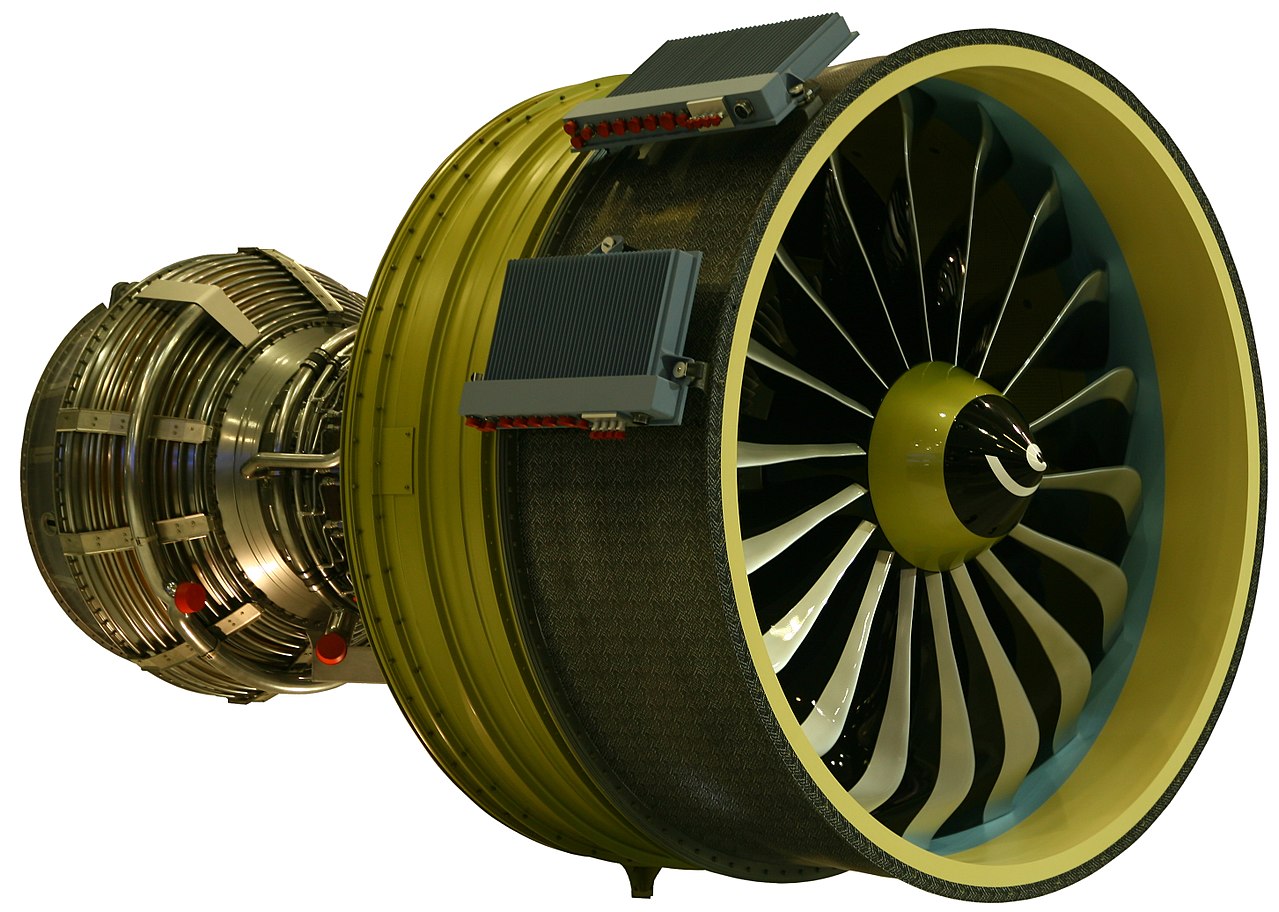
CFM International LEAP-1A
The CFM International LEAP-1A is a high-bypass turbofan developed jointly by CFM International (a GE Aerospace and Safran Aircraft Engines joint venture) for the Airbus A320neo family. It incorporates ceramic matrix composite (CMC) components in the combustor and high-pressure turbine for improved thermal efficiency, along with a 3D-woven RTM composite fan. The engine delivers significant fuel burn improvements over its CFM56 predecessor and entered service in 2016.
 Turbofan
CFM International
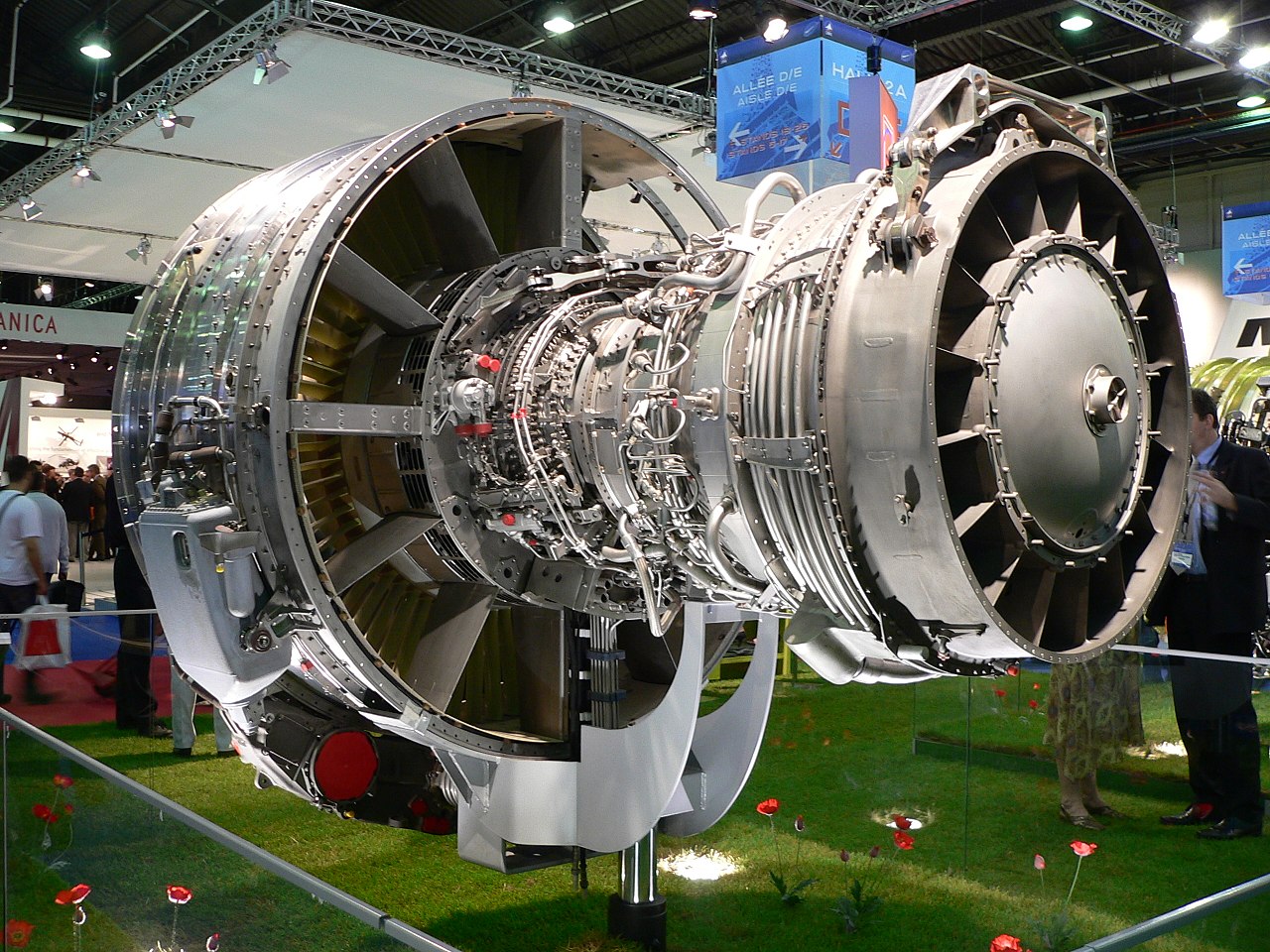
CFM56-7B
The CFM56-7B is the exclusive engine for the Boeing 737 Next Generation family, entering service in 1997. It is derived from the CFM56-3 and features a 24-blade wide-chord fan and full-authority digital engine control (FADEC). With over 8,000 engines delivered, it is one of the best-selling turbofan engines in commercial aviation history.
 Piston
Continental Aerospace
Continental IO-550
The Continental IO-550 is a fuel-injected, horizontally opposed six-cylinder aircraft engine with 550 cubic inches of displacement, producing 280 to 350 hp depending on the variant. It is used in high-performance single-engine aircraft and is known for its smooth power delivery and strong midrange torque. The IO-550 powers several popular Beechcraft Bonanza and Cessna 400 variants, and was the engine of choice for the Cirrus SR22 until 2003.
 Turbofan
GE Aviation
GE Aerospace CF34-8E
The GE Aerospace CF34-8E is a turbofan engine developed for the Embraer E-Jet family of regional jets. It is derived from the CF34-8C used on the CRJ700/900 series, featuring FADEC and a wide-chord fan for improved efficiency. The engine powers the E175 and E170 variants and entered commercial service in 2004.
 Turbofan
GE Aviation
GE Aerospace GE9X
The GE Aerospace GE9X is the world's largest and most powerful turbofan engine by thrust, developed exclusively for the Boeing 777X. It features the largest composite fan in aviation at 134 inches in diameter, fourth-generation carbon fiber composite fan blades, and ceramic matrix composite (CMC) components in the combustor and turbine. The engine delivers approximately 10% better fuel efficiency than its predecessor, the GE90-115B.
 Turbofan
GE Aviation
GE Aerospace GEnx-1B
The GE Aerospace GEnx-1B is a high-bypass turbofan developed for the Boeing 787 Dreamliner, making extensive use of composite materials including a carbon fiber composite fan case and blades. It incorporates twin-annular pre-swirl (TAPS) combustor technology for reduced NOx emissions and entered commercial service in 2011. The engine represents a significant advancement in fuel efficiency for wide-body aircraft.
 Turbofan
GE Aviation
GE Aerospace Passport
The GE Aerospace Passport (also called the Passport 20) is a high-bypass turbofan developed specifically for the Bombardier Global 7500 ultra-long-range business jet. It features a composite fan with 18 blades, advanced CMC hot section components, and FADEC, delivering class-leading specific fuel consumption for the large-cabin business jet segment. The engine entered service in 2018.
 Turbofan
Honeywell Aerospace
Honeywell HTF7000
The Honeywell HTF7000 (Honeywell Turbofan 7000) is a medium-bypass turbofan engine powering the Bombardier Challenger 300 and 350 business jets. It is derived from the TFE731 engine family but features a mixed-exhaust design and FADEC for improved performance and reliability. The engine delivers class-leading fuel efficiency for the super-midsize business jet segment and entered service in 2003.
 Turboprop
Honeywell Aerospace
Honeywell TPE331
The Honeywell TPE331 (originally Garrett TPE331) is one of the most widely used turboprop engines in general aviation, powering a broad range of single and twin-engine aircraft since the 1960s. Unlike free-turbine engines, the TPE331 uses a direct-drive architecture with a fixed-shaft turbine connected to the propeller gearbox, providing excellent torque response. Power ratings range from 575 to 1,650 shp across the numerous variants in the TPE331 family.
 Piston
Lycoming Engines
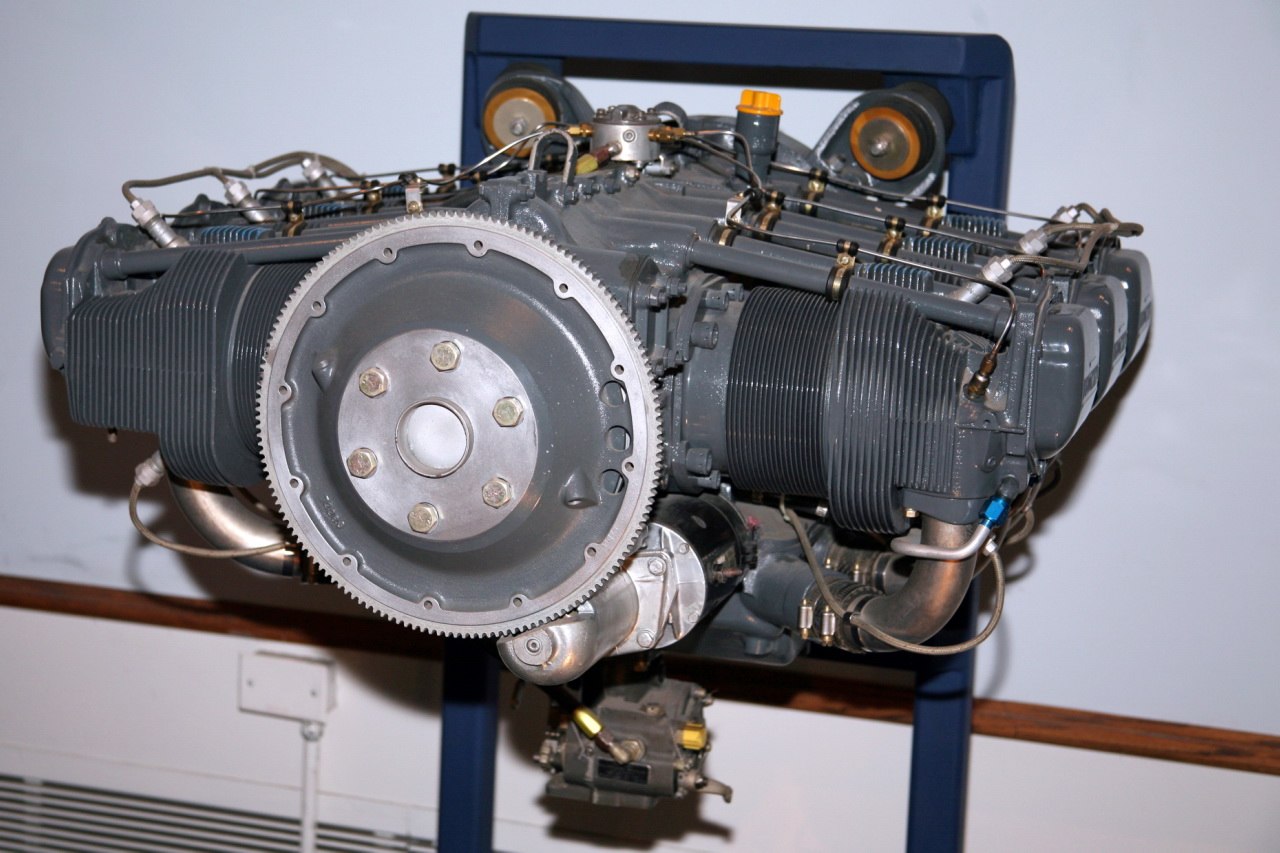
Lycoming IO-540
The Lycoming IO-540 is a naturally aspirated, fuel-injected, horizontally opposed six-cylinder aircraft engine producing 235 to 350 hp across its many variants. It is one of the most popular piston aircraft engines in general aviation, used in a wide variety of single and twin-engine aircraft. The IO-540 features direct fuel injection for improved mixture distribution and altitude performance compared to carbureted alternatives.
 Turboprop
Pratt & Whitney Canada
Pratt & Whitney Canada PT6A
The Pratt & Whitney Canada PT6A is the world's most widely used turboprop engine family with over 51,000 engines delivered, powering more than 130 aircraft types across commercial, military, and general aviation sectors. The reverse-flow, free-power-turbine design allows the engine to be started with much lower starter power and contributes to its compact dimensions. Power ratings range from 580 to 2,000 shp across the extensive variant lineup.
TurboshaftPratt & Whitney Canada
Pratt & Whitney Canada PT6C
The Pratt & Whitney Canada PT6C is a turboshaft engine variant of the PT6 family, specifically designed for medium and heavy helicopters where high power output and reliability are essential. The PT6C-67 variant powers the Sikorsky S-92 helicopter, delivering 1,800 shp with FADEC and automated health monitoring features. Like all PT6 engines, it uses a reverse-flow annular combustor and a free power turbine for independent rotor speed control.
 Turboprop
Pratt & Whitney Canada
Pratt & Whitney Canada PW100/PW127
The Pratt & Whitney Canada PW100/PW127 is a family of turboprop engines designed for regional airliners and multi-engine turboprops in the 2,000–5,000 shp class. The PW127 variant produces 2,750 shp and is optimized for the ATR 42 and ATR 72 regional turboprop aircraft, offering a high propulsive efficiency and low fuel consumption. The engine family features FADEC on later variants and has accumulated over 100 million flight hours.
 Turbofan
Pratt & Whitney Canada
Pratt & Whitney Canada PW300
The Pratt & Whitney Canada PW300 series is a family of turbofan engines spanning 4,700 to 7,000 lbf for mid-size business jets, featuring FADEC and a two-stage fan with a mixed exhaust nozzle. Variants include the PW305, PW306, and PW307, powering aircraft from Learjet, Dassault Falcon, and Embraer. The engine family is known for its fuel efficiency, low noise levels, and long on-wing life.
 Turbofan
Pratt & Whitney
Pratt & Whitney PW1100G GTF
The Pratt & Whitney PW1100G is a geared turbofan (GTF) featuring a reduction gearbox that allows the fan and low-pressure turbine to operate at their individually optimal speeds. It powers the Airbus A320neo family as an alternative to the LEAP-1A, offering up to 20% fuel savings over previous-generation engines. The engine entered commercial service in January 2016.
 Turbofan
Pratt & Whitney
Pratt & Whitney PW800
The Pratt & Whitney PW800 is a next-generation turbofan derived from geared turbofan technology, designed for large-cabin, ultra-long-range business jets. It features a reduction gearbox connecting the fan to the low-pressure turbine, enabling each component to operate at optimum speed for improved fuel efficiency and reduced noise. The PW800 powers the Gulfstream G500 and G600 business jets and entered service in 2018.
 Turboshaft
Rolls-Royce
Rolls-Royce M250
The Rolls-Royce M250 (originally the Allison Model 250) is the most widely used turboshaft engine in the world for light helicopters, with over 30,000 engines produced since its introduction in the 1960s. It is available in both turboshaft (helicopter) and turboprop (fixed-wing) configurations, with power ratings ranging from 250 to 715 shp across its many variants. The engine's modular construction and reverse-flow design make it well-suited for compact airframe installations.
 Turbofan
Rolls-Royce
Rolls-Royce Pearl 700
The Rolls-Royce Pearl 700 is a next-generation turbofan engine developed for the Bombardier Global 6500 and 5500 ultra-long-range business jets, representing the first new engine Rolls-Royce has designed specifically for the business aviation market in over 50 years. It incorporates advanced CMC and titanium-aluminide turbine components from the Trent family, along with a new composite fan and full-authority digital engine control. The engine entered service in 2019 and is the most fuel-efficient engine in the large cabin business jet segment.
 Turbofan
Rolls-Royce
Rolls-Royce Trent 7000
The Rolls-Royce Trent 7000 is the exclusive engine for the Airbus A330neo, sharing approximately 85% parts commonality with the Trent XWB-84. It features a 112-inch diameter composite fan, advanced compressor aerodynamics, and FADEC, delivering approximately 10% better fuel efficiency than the Trent 700 it succeeds. The engine entered commercial service in November 2018.
 Turbofan
Rolls-Royce
Rolls-Royce Trent XWB
The Rolls-Royce Trent XWB is the exclusive powerplant for the Airbus A350 XWB family and is the world's most efficient large aero engine by specific fuel consumption at the time of its introduction. It features a 3-spool architecture with an 84-inch diameter titanium wide-chord fan, a highly efficient compressor system, and a lean-burn combustor for low emissions. The engine entered commercial service in January 2015.
TurboshaftSafran Aircraft Engines
Safran Arriel 2
The Safran Arriel 2 is a family of turboshaft engines powering a wide range of light and medium helicopters, succeeding the original Arriel 1 with improved power and FADEC capability. Power outputs range from 847 to 990 shp across variants including the Arriel 2B, 2C, 2D, 2E, and 2S. The engine is noted for its compact size, high power-to-weight ratio, and wide operational envelope, powering the Airbus Helicopters H125, H130, and H145.
 Turbofan
Williams International
Williams FJ33
The Williams FJ33 is a compact turbofan engine developed for very light jets (VLJ) and advanced trainer aircraft, offering an excellent thrust-to-weight ratio in an extremely small package. It is used in the Eclipse 500/550 and Cirrus Vision SF50 personal jets, as well as several military trainer applications. The engine features a two-stage fan, centrifugal compressor, and annular combustor in a pod-mountable design.
 Turbofan
Williams International
Williams FJ44
The Williams FJ44 is a family of small turbofan engines widely used in light and very light business jets, offering high reliability in a compact and lightweight package. The FJ44 series spans thrust ratings from 1,900 to 3,600 lbf across multiple variants including the FJ44-1, FJ44-2, FJ44-3, and FJ44-4. It powers aircraft such as the Cessna Citation CJ series, Pilatus PC-24, and Sino Swearingen SJ30.